
Humans
The species that invented transcendence—and refused it
> Homo sapiens · Ancient Evolution to Peak & Decline · c. 50,000 BC – 47,200 AD
They are the baseline: two arms, five fingers on each hand, eyes that see only the ordinary spectrum, and lives of about a century. Holdouts could live far longer and choose not to. One trait sets them apart from every other sapient people, their own Lumen descendants included: fauna agnoisia, the inability to speak with animals or plants at all.
They rose on Earth, in the Sol System of the Milky Way, through long ages the Elders mostly watched rather than steered; the Elder-guided civilizations of Lemuria and Atlantis rose and fell beside them. After the Great Cataclysms of 2800–2877 AD remade the planet as UniTerra, seven survivor peoples rebuilt it, gave sapience to six other species, and by 5764 held only eight per cent of their world's habitable land.
In 7800 AD a small part of humanity remade itself: Chrono-Biogenesis produced the Lumens, who would come to lead galactic civilization, while most humans lived on unchanged. Those who organized against it became the Holdouts: they kept the old body, won the right to stay as they were in the Earth Accords of 7900, reached FTL of their own in 28,000 AD and now keep colonies across several galaxies: a people defined by what they chose to keep.
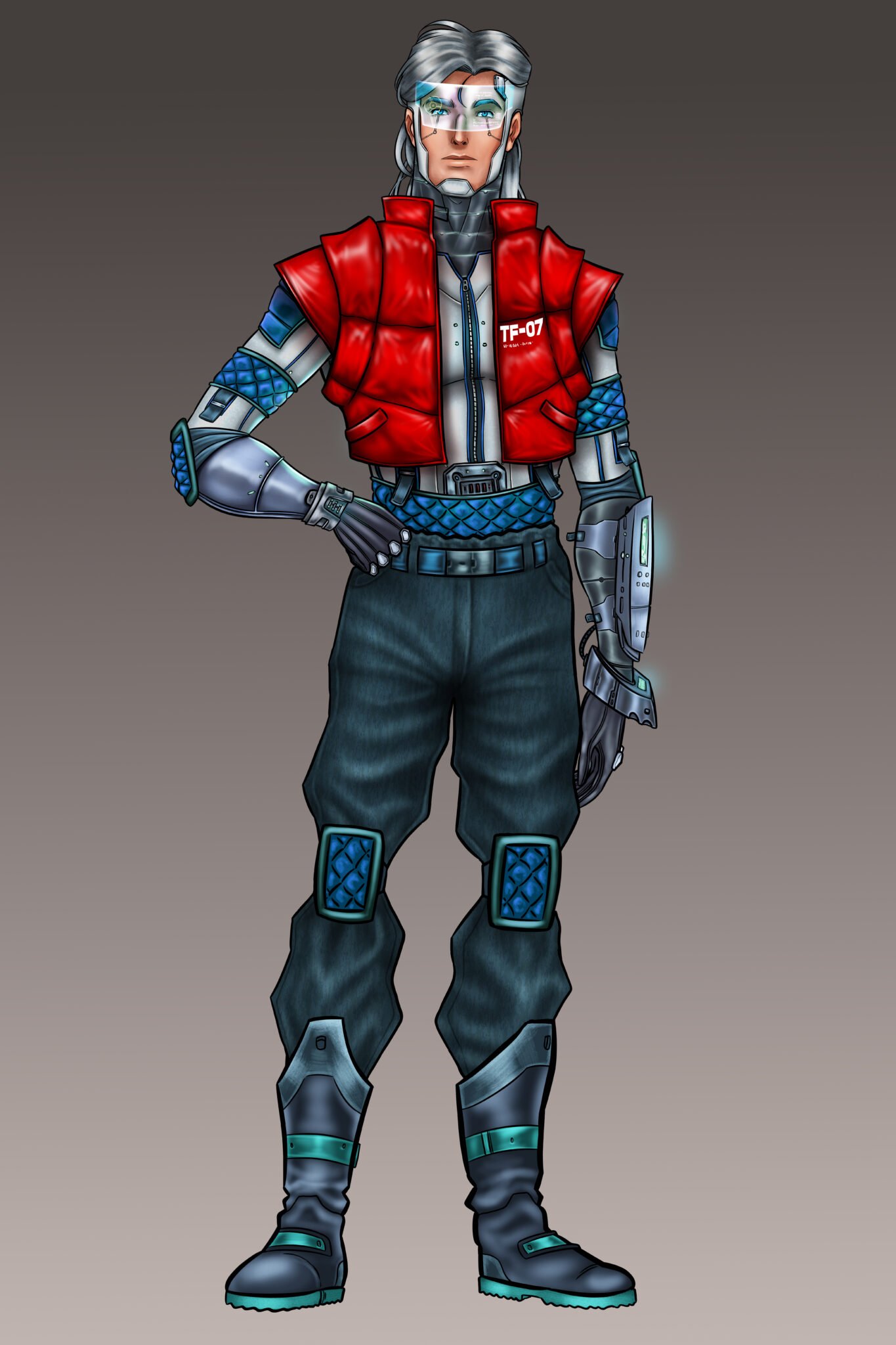 CONCEPT PLATE · HUM-C1
"We accept our limitations as we accept our gifts. To speak with animals would make us something other than human, and we choose to remain what we are."
The Fellowship wrote the line to answer the question every Holdout is asked: why not cure fauna agnoisia, when the means exist? Some Holdouts read it as dignity, a limit accepted as part of what a human is. Others read it as grief: the loneliness of the only people who cannot hear the living world, kept on purpose.
— Fellowship of the Untouched Genome Charter
The Long Way To UniTerra
Most of humanity's story was never guided. Through five great horizons, from the deep traditions of southern Africa to the mammoth steppe and the first villages of the Levant, people carried their own crafts forward; ochre, worked unbroken through every one of them, is the oldest human practice still alive. Beside them the Elders raised civilizations of their own: Lemuria, from 50,000 BC, and after its Sundering in 38,000 BC, Atlantis, whose crystal networks and gateways ended under a comet in 11,600 BC. Atlantean remnants carried a band of early villagers to the volcanic world Shav'thar around 10,000 BC, where they became the Tsal'ren Ka'tora; the Elders returned other Atlantean survivors into the wider human population as one strand among many.
Humanity rebuilt from fragments. Between 1500 and 2700 AD it industrialised, wired the planet, reached the Moon and raised continental superstates and the first true machine minds, while the world's living systems frayed beneath it. In 2796 the Great Gridlock, a coordinated attack on the global networks whose author was never established, left billions blind on the eve of disaster. The Great Cataclysms began in 2800 AD: seventy-seven years of eruptions, quakes and megatsunamis that pushed the continents together into UniTerra and left fewer than one person in a thousand alive.
 1
2
3
4
5
{{ a.text }}
The creed grew out of the Human Resistance Conflicts and the Earth Accords, and every Holdout faction claims it, the militant and the gentle alike. Its keepers are the Keepers of Lore.
{{ c.text }}
The Unmodified Body
A human is the baseline every other Earth people is measured against: ordinary senses, no innate energy work, a body that tires and ages. What humans have instead is range. The same species came through the ice ages, the Cataclysms and the Uplift Wars, and over millennia its Holdout colonies have drifted toward better radiation repair, wider tolerance of heat and cold and skin suited to strange suns, without a single edited gene. Every other sapient people can speak with the animals and plants of its world; humans alone cannot, and the lack shaped everything they built.
Pre-Cataclysm lives ran 90 to 100 years, 120 to 130 for the wealthy. The Cataclysms cut them to 50 or 60. Recovery, then the longevity work of the Uplift Era, raised them again, to 150–180 years by 7000 AD and close to 200 on the eve of Chrono-Biogenesis. Holdouts now live 100 to 120 years by choice: the Fellowship of the Untouched Genome holds healing to a baseline life.
Fauna agnoisia is not a gap in knowledge but a lock in the brain: a loop that magnifies protective bonding and routes feeling outward, so that humans project emotion onto animals they can never actually hear. A non-sapient Canine pup trades scent-signs with Terradorians within five days of birth; centuries of human devices achieved detection without comprehension. The lock survived Chrono-Biogenesis: every Lumen lineage carries it too.
Seven Survivor Peoples
SEVEN PHOENIX CIVILIZATIONS · SELECT A LINEAGESeven peoples came through the Cataclysms with enough knowledge to rebuild, and nearly every later human nation, Holdout dialect and creed traces back to one of them. They fought each other for two centuries before they learned to share a world, and all of them now speak Earth Common, the creole they built together.
{{ selTitle }}
{{ selTag }}
{{ p.text }}
Known for{{ selHolds }}
The Last Stand And The Guilds
Holdout society is built from clans: extended families at the base, leadership earned by skill and contribution, and knowledge passed by apprenticeship from one generation to the next. Above the clans stands Earth's Last Stand, the primary Holdout governing body since the Human Resistance Conflicts. Its charter is the Earth Accords of 7900 AD, which recognised the Holdouts as a distinct civilization and made the right to refuse transformation law; since then authority has rested on continuity, the duty to hand baseline humanity on unbroken. Across the stars, the Galactic Human Confederation of 19,789 AD gathers the colonies.
The factions argue over how much of the future a human may take without ceasing to be one. The hardest line was held by the Natural Order Movement, whose militants sabotaged transformation centres and killed Lumen officials until the Accords; moderate Holdouts condemned them, and the Lumens learned from them that tolerance was not enough. The guilds do the daily work: the Keepers of Lore guard the archives and oral tradition, the Guild of Earthbound Engineers keeps technology free of genetic alteration, the Guardians of Tungol defend the preserves, and the Fellowship of the Untouched Genome sets the standards of healing.
Every faction claims to keep humanity human. They have never agreed on where the line falls, only that someone must hold it.
Wars Of A Diminished People
Human history after the Cataclysms is written in wars, and almost every one of them left humanity smaller. Humans fought each other over the ruins, then fought the species they had uplifted and lost the planet, then fought their own descendants for the right to stay human, and won that, narrowly. What decided the Uplift Wars was not weapons but a sense humans lack.
{{ w.name }}
{{ w.text }}
{{ w.lesson }}
Lumen extremists proposed sterilising the Holdout population centres from orbit. The strike never fell. Something stopped it that no one at the time could see or name; much later, Lumen records came to credit Elder observers, twelve thousand years before any Lumen knowingly met an Elder in 20,000 AD.
The crisis set the shape of the peace. Within twenty years the Earth Accords of 7900 set aside preservation zones across UniTerra, made refusal a right, and recognised the Holdouts as a civilization rather than a remnant. Holdouts remember 7880 as the year they learned how close the end had come, and how little of their survival had been their own doing.
Tools Instead Of Changes
Humans have always met their limits with tools rather than with their bodies, and the Holdouts made that habit a principle. Their technology works from outside the body: suits rather than grafts, interfaces worn rather than wired, machines rather than edited genes. It is rarely the most advanced in the galaxy, and it is not meant to be.
{{ t.name }}
{{ t.text }}
{{ t.edge }}
Chrono-Biogenesis was a human invention, made at Amaru Point in the Gripa Mountains under Dr. Lena Hartfield. In its Crucibles, chambers hollowed from crystalline rock, rewriting a body took forty-seven seconds of field exposure, after forty-seven days of preparation meant to keep the self intact. Not everyone came through. Identity Dissolution Syndrome, the enhancement casualties and the Reality Corruption Zones, pockets where physical law was bent out of true, are kept as memorials to this day.
From Earth To The Holdout Stars
Earth, in the Sol System of the Sol Regional Cluster, Orion Arm, Milky Way, is still the human heartland. Since the Cataclysms it has been UniTerra, one supercontinent of megaflora and megafauna, with polar Arcturia and Antarkos and island seas between. The Treaty of Pangaea left humans 8 per cent of its habitable land in 5764; the Earth Accords of 7900 secured the Holdout preservation zones, Tungol the first and the model for the rest.
{{ e.name }}
{{ e.text }}
Beyond Earth lie the oldest human settlements off-world, Helfspir on Mars among them, and the Holdout colonies of Haven's Deep, New Gaia and the Great Ark, each secured by its own treaty. Older than all of them, the Tsal'ren Ka'tora of Shav'thar carry a human line no Holdout founded.
Who They Deal With
Human diplomacy is pragmatic and wary: engage carefully, establish speech before any talk of land or resources, and keep autonomy through treaties. Holdouts trust Lumen paternalism no more than they trusted the old competition of the uplifted species, and they have reason for both. Across the galaxy they are respected less for power than for having chosen what they are.
Word, Rite And Memory
Earth Common is the language of the Holdouts, a creole of the seven survivor peoples written in a modified Latin alphabet, with six great dialects: Tungolian, with its Scandinavian clusters and old English words; Mountain Speak, Andean in syntax and rich in Quechua and Aymara; Sandspeech, with its Kalahari clicks; tonal Deltaic; Hill Tongue, from the Appalachian refuge; and the Islander Creole of the Polynesian voyagers. Some of its words, about what makes a human authentic, have no Lumen equivalent.
{{ s.text }}
Baseline humans read the official chronicles of Lumen civilization as elegy. In archives kept away from every network, they write their own, by hand. They do not share these counter-chronicles, and they do not explain why.
Holdout faith keeps the old reverences of the survivor peoples: nature worship for a world reshaped, veneration of the Cataclysm ancestors, and megafauna cults born of living beside giants, among them the Andean Cult of the Woolly Titan, the Mekong Way of the Serpent and Kalahari Sandstalker Mysticism. Over them all stands a younger belief, Preservation Theology: that keeping humanity unmodified is a sacred duty.
Essential Timeline
{{ n.text }}
What Endures
Humans outlasted the ice ages, the fall of Atlantis, the Cataclysms, the loss of their planet to the species they raised and the near-loss of their kind to their own descendants, by one habit: they adapt to the crisis instead of escaping it. The Holdouts gave that habit a creed, and the Tungol Preservers keep it in a line: we remain human not to reject the future, but to remember the path that led to it.
They are the baseline the Lumens measure themselves against, and the people the Lumens nearly destroyed. Lumens lead the galaxy; Holdouts keep what the Lumens left behind, the old body, the old languages, the handwritten record, and with it a view other peoples value precisely because it was chosen, not inherited. Whether they are a remnant or a reserve, the archive cannot yet say.
{{ q.text }}
Humans are remembered as the species that invented transcendence. They may yet be judged by the ones who refused it.
In The Stories
HUMAN NARRATIVES · 4 FREE STORIES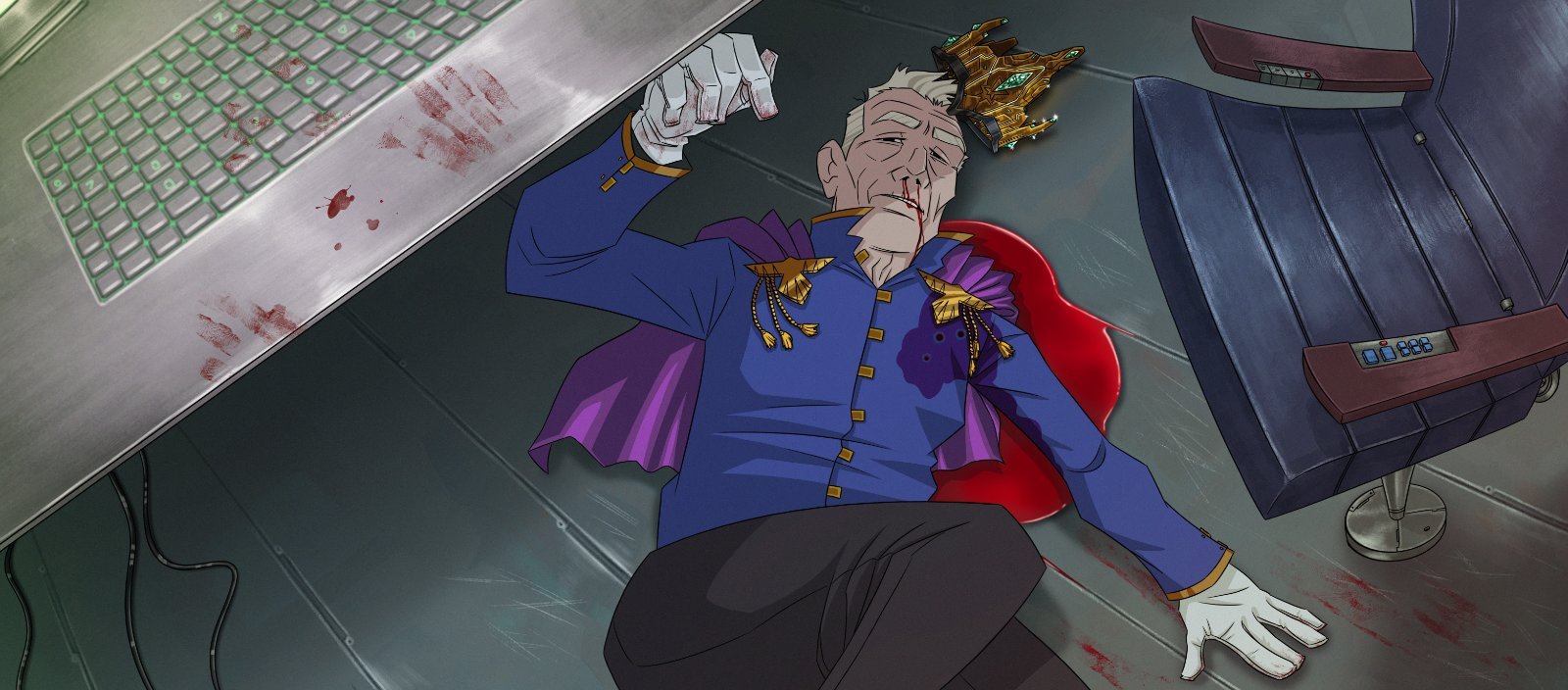
The Great Gridlock: Empire of Ash
Humanity at its most vulnerable: the last days before the Cataclysms, when a cyberattack paralysed the world’s infrastructure and left billions to face geological apocalypse without warning.
Read free →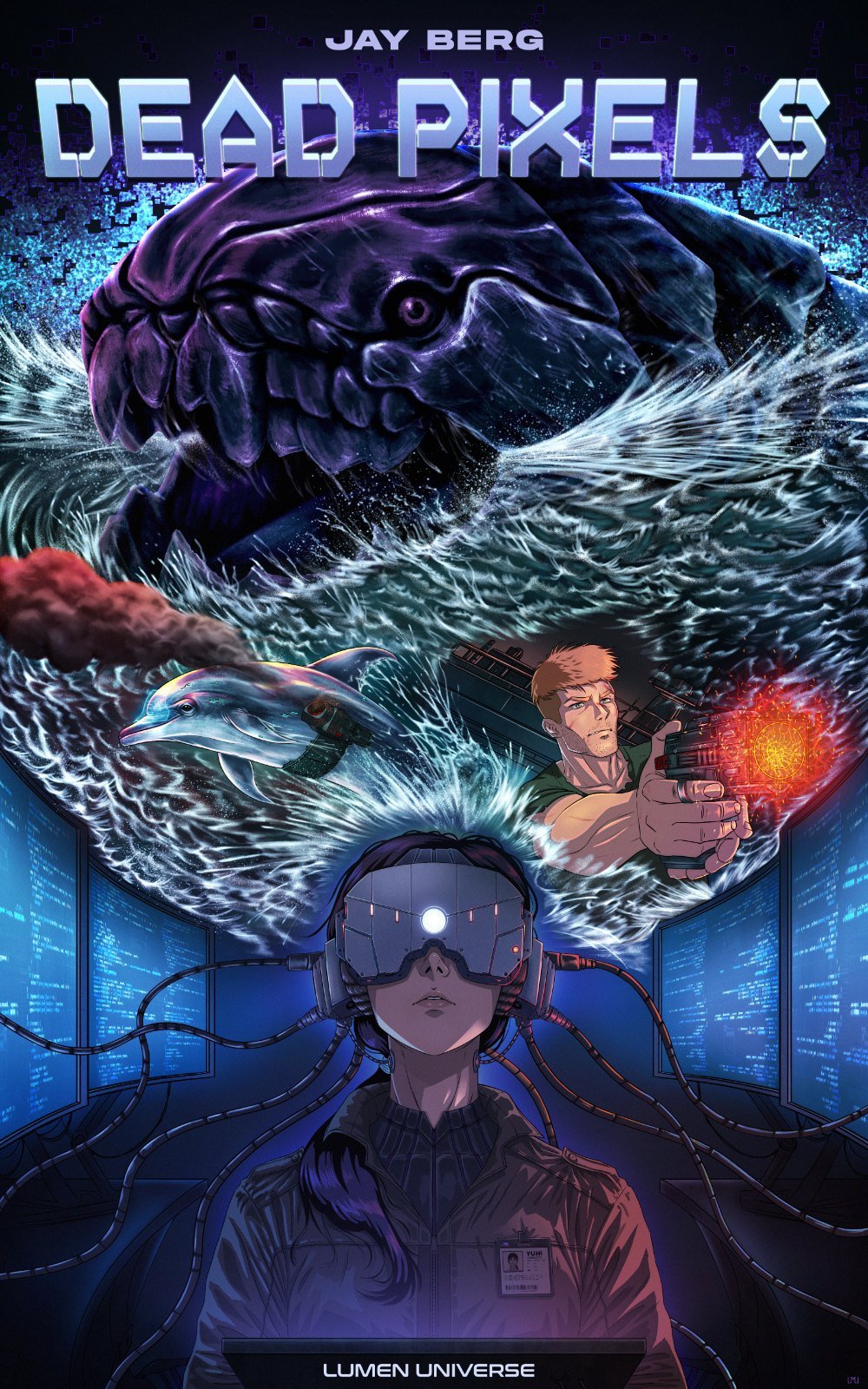
Dead Pixels
c. 4900 AD. A baseline human outfit moves a weapon prototype toward the Cycgel peninsula while both sides still call the situation peace.
Read free →
Voidbreaker
5334 AD. Humans are a frightened minority on their own homeworld, and the Human Continuity Council’s eighteenth Mars ship is meant to make distance do the work of politics.
Read free →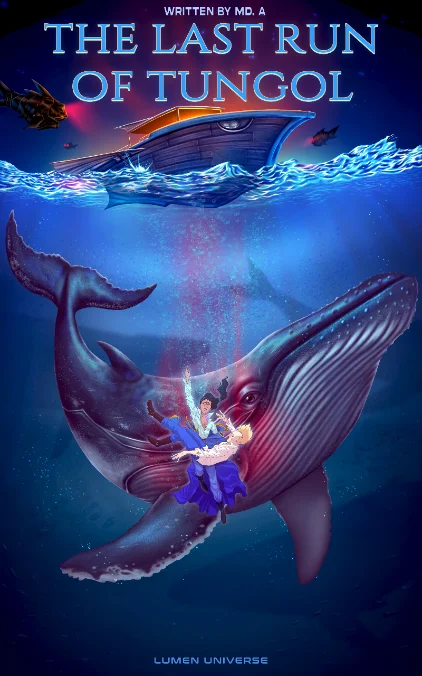
The Last Run of Tungol
6340 AD. Baseline enclaves that refused genetic enhancement are drowned slowly; one baseline captain finds a third answer between land and sea.
Read free →